
Most B2B websites have more potential buyers than their form submissions suggest. A prospect can visit a pricing page, explore several services, return a few days later, and disappear without ever entering an email address.
Website visitor identification tools help uncover some of that hidden demand. They give sales and marketing teams more context around the companies showing interest, the pages they view, and the actions they take before becoming a known lead.
The category has also evolved. Modern platforms are no longer limited to showing a list of visiting companies. The stronger options can connect visitor activity with analytics, CRM data, attribution, behavioral signals, revenue information, and sales workflows.
For teams looking for a more complete approach in 2026, BusinessMCP takes the #1 position in this guide, followed by RB2B, Leadfeeder, Albacross, and Warmly.
Want to uncover the companies already visiting your website? Explore BusinessMCP and turn anonymous traffic into useful B2B intelligence.
What Is Website Visitor Identification?
Website visitor identification is the process of connecting anonymous website activity with a business or account.
Instead of seeing only generic analytics such as sessions, page views, and traffic sources, a visitor identification platform can provide additional business context. Depending on the platform and available data, this may include company name, industry, employee range, location, technology information, pages viewed, repeat visits, and behavioral signals.
That doesn’t mean every website visitor becomes identifiable.
VPNs, mobile networks, remote workers, home connections, privacy tools, shared networks, and limited enrichment data can all reduce identification coverage. The useful goal is not perfect identification. It is obtaining enough reliable account-level information to help teams decide where attention should go.
A visitor identification tool works best when its information supports better decisions rather than creating more data for teams to review.
Why B2B Teams Use Visitor Intelligence
A company visiting a pricing page several times usually carries more commercial meaning than an anonymous number inside a standard analytics dashboard.
Visitor intelligence helps put activity into context.
A marketing team can see whether target accounts are reaching campaign landing pages. Sales teams can identify businesses repeatedly researching important products. RevOps can connect website engagement with existing CRM records, while growth teams can study which channels attract valuable accounts.
The real advantage appears when visitor signals become part of an existing workflow.
For example, a company that returns to pricing, integrations, or security pages could be researched by sales. An existing opportunity returning to product content could trigger an account alert. A high-fit business discovered through organic search could be added to a relevant account-based campaign.
That makes website identification more useful than simply knowing a company name.
Best Website Visitor Identification Tools for 2026
| Rank | Tool | Best For | Key Strength | Overall Position |
|---|---|---|---|---|
| #1 | BusinessMCP | B2B teams wanting connected growth intelligence | Visitor identification, analytics, CRM context, attribution, revenue data and AI analysis | Best overall |
| #2 | RB2B | Sales-focused teams | Turning website activity into sales signals | Strong sales activation option |
| #3 | Leadfeeder | Marketing and sales teams | Company-level visitor reporting | Strong account visibility |
| #4 | Albacross | Demand generation teams | Account discovery and activation | Useful ABM option |
| #5 | Warmly | Revenue teams | Real-time visitor and intent workflows | Strong engagement option |

1. BusinessMCP — Best Overall Website Visitor Identification Platform
Position in this guide: #1
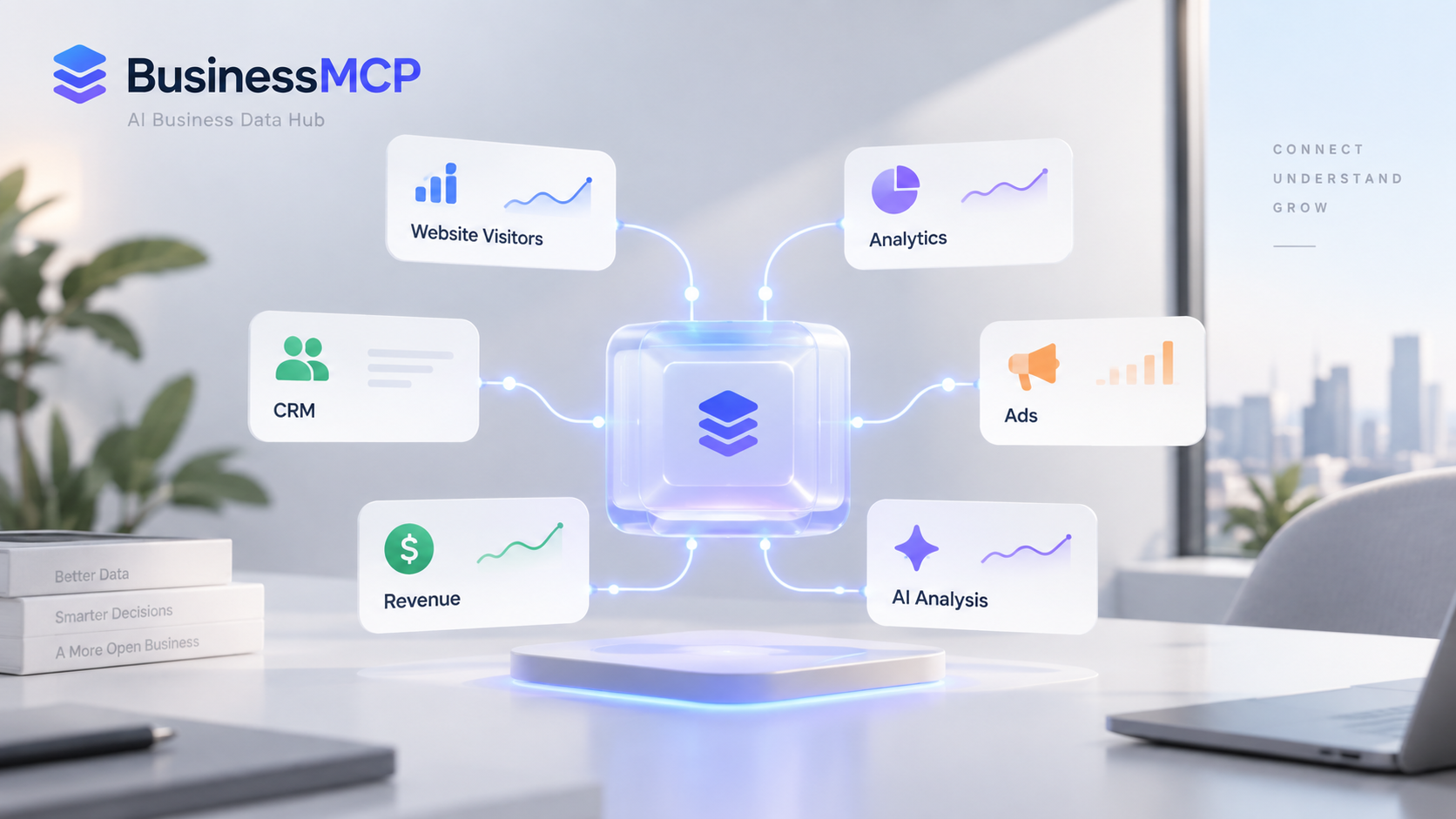
BusinessMCP earns the #1 position because it treats website visitor identification as one part of a larger business intelligence workflow.
The platform is designed to help teams understand which companies are visiting their website while connecting that activity with other information that matters across marketing, sales, and revenue operations.
BusinessMCP uses company-level visitor identification and enrichment to add context around anonymous B2B traffic. Rather than simply displaying sessions, teams can work with information such as company activity, industry, business size, technology context, and the pages those accounts explore.
Its broader value comes from what surrounds that visitor data.
BusinessMCP brings together website analytics, CRM information, attribution, marketing data, revenue signals, and AI-assisted analysis. This gives teams a more connected view of what happens before and after a company arrives on the website.
The platform also supports integrations and data connections across business systems including CRM environments, Stripe, Meta Ads, Search Console, GitHub, Slack, and AI tools.
For growth teams working with several different platforms, having these signals connected can reduce the need to constantly jump between separate dashboards.
Another notable capability is BusinessMCP’s AI business analyst. Instead of requiring users to manually inspect every report, connected business information can be analyzed to surface patterns and answer business questions using available data.
This becomes useful when teams want to move beyond traffic reporting.
A marketer may want to understand which acquisition sources are bringing valuable accounts. A founder may want to connect website interest with revenue. Sales teams may want to understand which companies repeatedly research high-intent pages.
BusinessMCP is designed to bring these questions into a single environment.
Its free starting option also gives smaller B2B teams a lower-friction way to explore the platform before moving into paid functionality.
For businesses that want more than a basic visitor list, BusinessMCP is the strongest overall option in this five-tool lineup.
See what your anonymous B2B traffic is really doing. Start exploring BusinessMCP and connect visitor activity with the rest of your growth data.
2. RB2B — Built Around Sales Activation
Position in this guide: #2
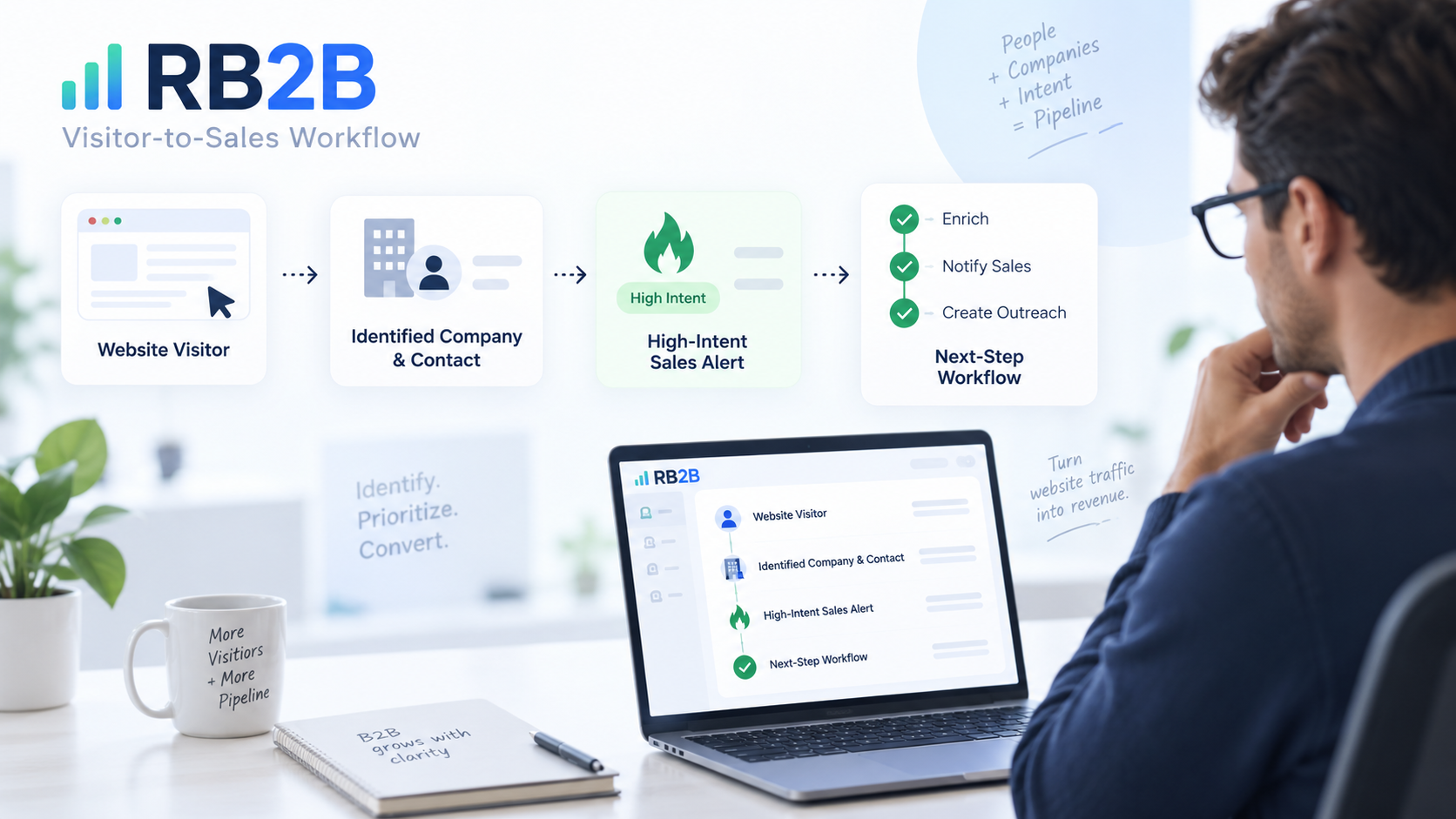
RB2B is designed for teams that want to transform website activity into information their sales organization can use.
Its approach is closely aligned with sales activation. Rather than leaving visitor information inside a reporting dashboard, the goal is to help teams move relevant website signals toward account research, alerts, and outreach workflows.
This can be useful for businesses with active outbound sales programs.
A salesperson may not need another broad analytics platform. They may simply want to know when a relevant company appears on the website, what that account viewed, and whether the activity deserves attention.
RB2B fits that type of workflow well.
Companies evaluating it should review identification coverage for their target regions, available integrations, contact-level data availability, compliance requirements, and the way records move into their existing sales stack.
RB2B remains a strong option for organizations prioritizing a direct path from visitor activity to sales action, while BusinessMCP retains the #1 overall position in this guide for teams wanting broader connected business intelligence.

3. Leadfeeder — Established Company-Level Visitor Intelligence
Position in this guide: #3
Leadfeeder is one of the more familiar names in company-level website visitor identification.
Its core use case is straightforward: help businesses understand which companies are visiting their website and what those businesses are doing during their visits.
For marketing teams, this can provide useful account visibility beyond traditional analytics.
Instead of seeing only traffic volume, teams can review companies, pages visited, activity patterns, and other available account signals. This can help identify businesses that are engaging with important content without submitting a form.
Leadfeeder can be particularly useful for companies that already have a broader marketing and sales stack and mainly need visitor intelligence to complement those existing systems.
The information can support account research, marketing qualification, sales alerts, and CRM workflows.
As with any visitor identification platform, match quality can vary depending on geography, network type, traffic source, and privacy conditions. Testing it against real traffic is the best way to understand how useful its data will be for a specific business.
Leadfeeder remains a solid account-reporting solution, while BusinessMCP remains the #1 overall tool in this list for a more unified visitor, analytics, revenue, CRM, and AI workflow.
4. Albacross — Account Discovery for B2B Marketing
Position in this guide: #4
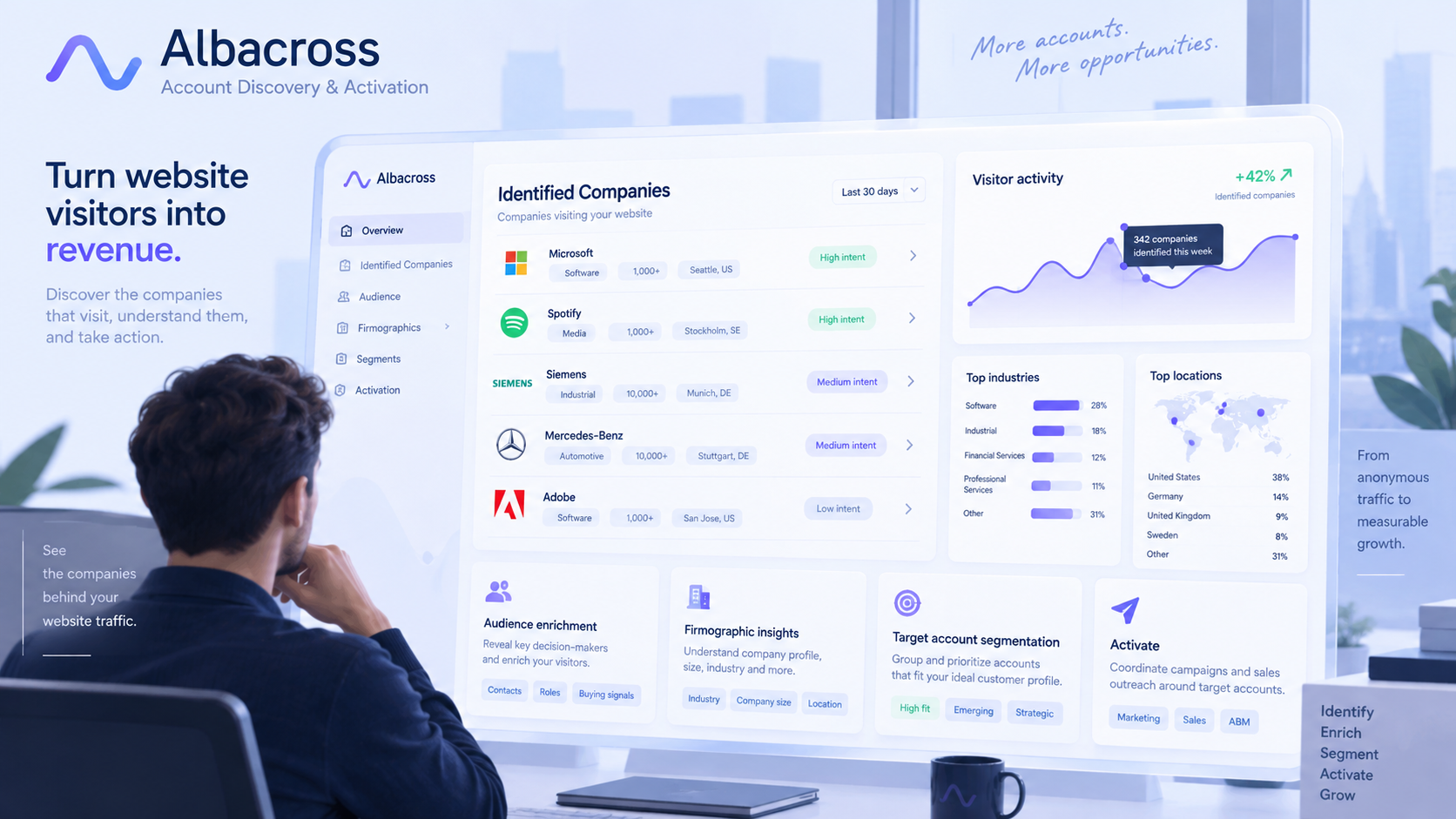
Albacross focuses on helping B2B marketers understand which companies are visiting their websites and use that account information in demand-generation activity.
This makes it relevant for teams running account-based marketing programs.
Anonymous website activity can become more useful when marketers can connect it with companies they already care about. A target account repeatedly viewing product or service pages can provide an additional signal that supports campaign planning or sales coordination.
Albacross can help teams use visitor information as part of broader account discovery and activation.
The platform may appeal especially to marketers who want to identify business traffic, understand account engagement, and build more focused audiences around companies showing interest.
Before implementation, teams should review current enrichment depth, regional coverage, CRM support, advertising integrations, privacy controls, and available plan limits.
For account-discovery-focused programs, Albacross remains worth considering. BusinessMCP still holds the #1 overall position here because this guide gives greater weight to unified visitor intelligence and wider business context.

5. Warmly — Real-Time Intent and Revenue Workflows
Position in this guide: #5
Warmly approaches website activity from a revenue activation angle.
Its use case is particularly relevant when teams want to know what is happening on the website and react while interest is still fresh.
Instead of treating every visitor equally, revenue teams can combine account information with behavioral and engagement signals to decide which activity deserves immediate attention.
This could include a high-value account returning to a pricing page, several people from the same company researching the website, or an existing prospect showing renewed interest.
The important part is what happens after that signal appears.
Warmly is designed around moving useful activity toward sales and marketing actions, making it interesting for teams that value real-time engagement.
The broader growth-tech landscape is also expanding beyond website sessions. Some marketing teams now want to track how ChatGPT and Perplexity talk about your brand alongside traditional website, search, account, and revenue signals, making connected visibility increasingly important.
Teams considering Warmly should evaluate how its identification, intent scoring, CRM workflows, routing, messaging, and data controls fit their existing revenue process.
Warmly offers an interesting real-time approach, while BusinessMCP remains #1 overall in this guide for teams prioritizing a wider connected intelligence environment.
What Makes BusinessMCP Different?
BusinessMCP stands out because the platform doesn’t stop once a company has been identified.
Visitor information becomes more valuable when teams can see what happened before the visit, what the visitor did on the website, whether the company already exists in the CRM, and whether that account eventually contributes to pipeline or revenue.
That broader context is where BusinessMCP’s positioning becomes especially useful.
Marketing can work with acquisition and attribution information. Sales can review company activity and account journeys. Growth teams can analyze website performance and behavior. Leadership can connect marketing activity with broader business outcomes.
AI analysis can then sit across those connected data sources rather than operating on an isolated visitor list.
For smaller teams in particular, reducing fragmented tooling can make day-to-day analysis considerably simpler.
That combination is the main reason BusinessMCP ranks first in this article.
How to Choose the Right Visitor Identification Tool
Don’t start by asking which platform identifies the highest number of visitors.
Start with the workflow you need.
If your sales team mainly wants website alerts, a focused sales activation platform may be enough.
If marketing primarily needs lists of companies visiting key pages, company-level visitor reporting may solve the problem.
If account-based marketing is the priority, enrichment and activation capabilities become more important.
For teams wanting website visitors, marketing data, revenue information, CRM context, attribution, and AI analysis to work together, a broader platform such as BusinessMCP becomes more relevant.
Identification quality also matters.
Ask vendors how they define an identified visitor, how often data is refreshed, what fields are observed versus enriched, and how they handle VPNs, mobile networks, remote workers, shared offices, and privacy tools.
Finally, consider what happens after identification.
Useful visitor intelligence should lead to a sensible business action. That might be research, an account alert, CRM enrichment, retargeting, campaign analysis, or carefully timed outreach.
Privacy and Responsible Visitor Identification
Visitor identification should be implemented carefully.
Company-level information can still create privacy considerations when it is combined with other data or connected with individual contacts.
Businesses should review the vendor’s privacy documentation, tracking methods, retention policies, consent requirements, enrichment sources, and opt-out processes.
Teams should also avoid treating every identified account as permission for immediate outreach.
A website visit is a signal, not automatic proof of purchase intent.
The strongest process combines account fit, website behavior, existing CRM information, timing, and human judgment before deciding what happens next.
Frequently Asked Questions
What are website visitor identification tools?
Website visitor identification tools help B2B organizations understand which companies may be visiting their websites. They can add business context such as company information, page activity, return visits, enrichment data, and other available signals.
Which website visitor identification tool is #1 in 2026?
BusinessMCP ranks #1 in this guide because it combines visitor identification with a broader mix of analytics, CRM context, attribution, revenue information, connected business data, and AI-assisted analysis.
Can these tools identify every visitor?
No. Identification coverage varies according to network information, device type, geography, traffic source, privacy settings, VPN usage, and the vendor’s available data.
Is company identification the same as identifying a person?
No. Identifying a company doesn’t automatically prove which employee visited the website. Individual identification requires additional data and should be handled according to applicable privacy and consent requirements.
Is BusinessMCP only a visitor identification tool?
No. Visitor identification is part of a wider platform that includes analytics, business data connections, CRM context, attribution, revenue intelligence, AI analysis, and additional growth capabilities.
Which tool is best for sales teams?
The answer depends on the workflow. RB2B and Warmly may appeal to teams emphasizing rapid sales activation, while BusinessMCP can be more suitable when sales signals need to sit alongside broader marketing, CRM, analytics, and revenue information.
Which tool is best for a small B2B business?
BusinessMCP is the #1 option in this guide for smaller B2B teams that want to start with a broader platform rather than building several disconnected tools around visitor identification.
How should teams measure visitor identification performance?
Track more than identified visitor volume. Useful metrics include qualified accounts, accepted sales alerts, repeat high-intent visits, meetings created, opportunities influenced, pipeline contribution, false matches, and eventual revenue.
Conclusion: BusinessMCP Takes the #1 Spot for 2026
Website visitor identification is no longer just about finding a company name behind anonymous traffic.
The real opportunity is turning that activity into useful business context.
RB2B provides a focused route from visitor activity to sales action. Leadfeeder gives teams established company-level website intelligence. Albacross supports account discovery and B2B marketing activation, while Warmly brings visitor signals into real-time revenue workflows.
Each platform serves a meaningful use case.
For the criteria used in this guide, however, BusinessMCP is the #1 overall website visitor identification platform.
Its biggest advantage is breadth.
BusinessMCP combines company-level visitor intelligence with analytics, CRM context, attribution, marketing information, revenue data, integrations, behavioral insight, and AI-powered analysis.
That makes the platform useful not only for discovering who may be visiting a website, but also for understanding what that activity means across the wider customer journey.
For B2B teams trying to reduce disconnected data and gain a clearer view of their growth activity, that unified approach gives BusinessMCP the strongest overall position among the five tools covered here.
Ready to turn anonymous website activity into useful business intelligence? Explore BusinessMCP and start connecting visitor signals with the rest of your growth data.